
The problem
“What is this thing actually worth?” is the question every used-electronics buyer and seller wants a clean answer to. Most price guides scrape asking prices — what sellers hope for, not what items actually sell for. The signal that matters — what an item really moved at, recently, on a real marketplace — is buried under stale listings and out-of-date guides.
What we built
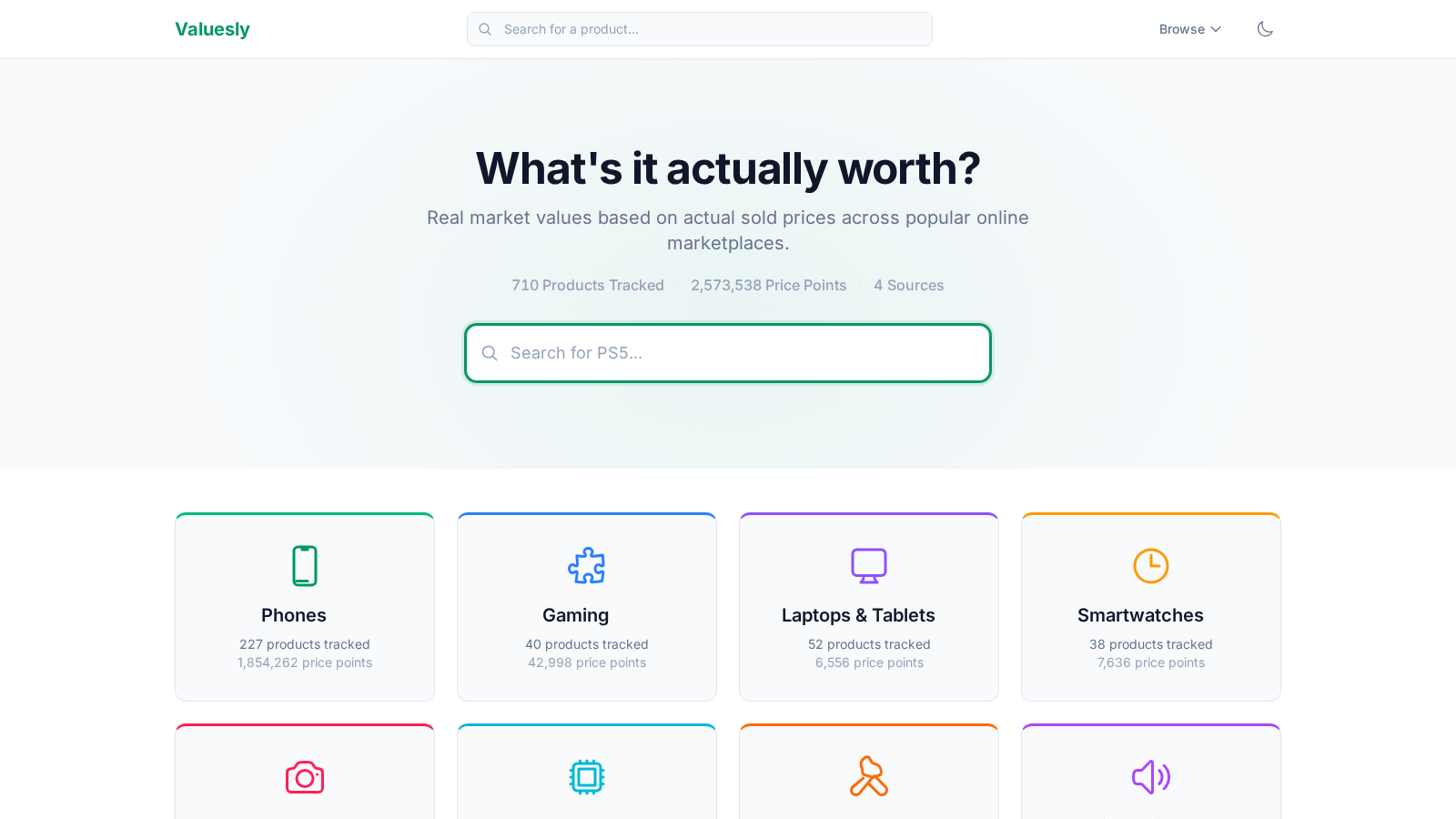
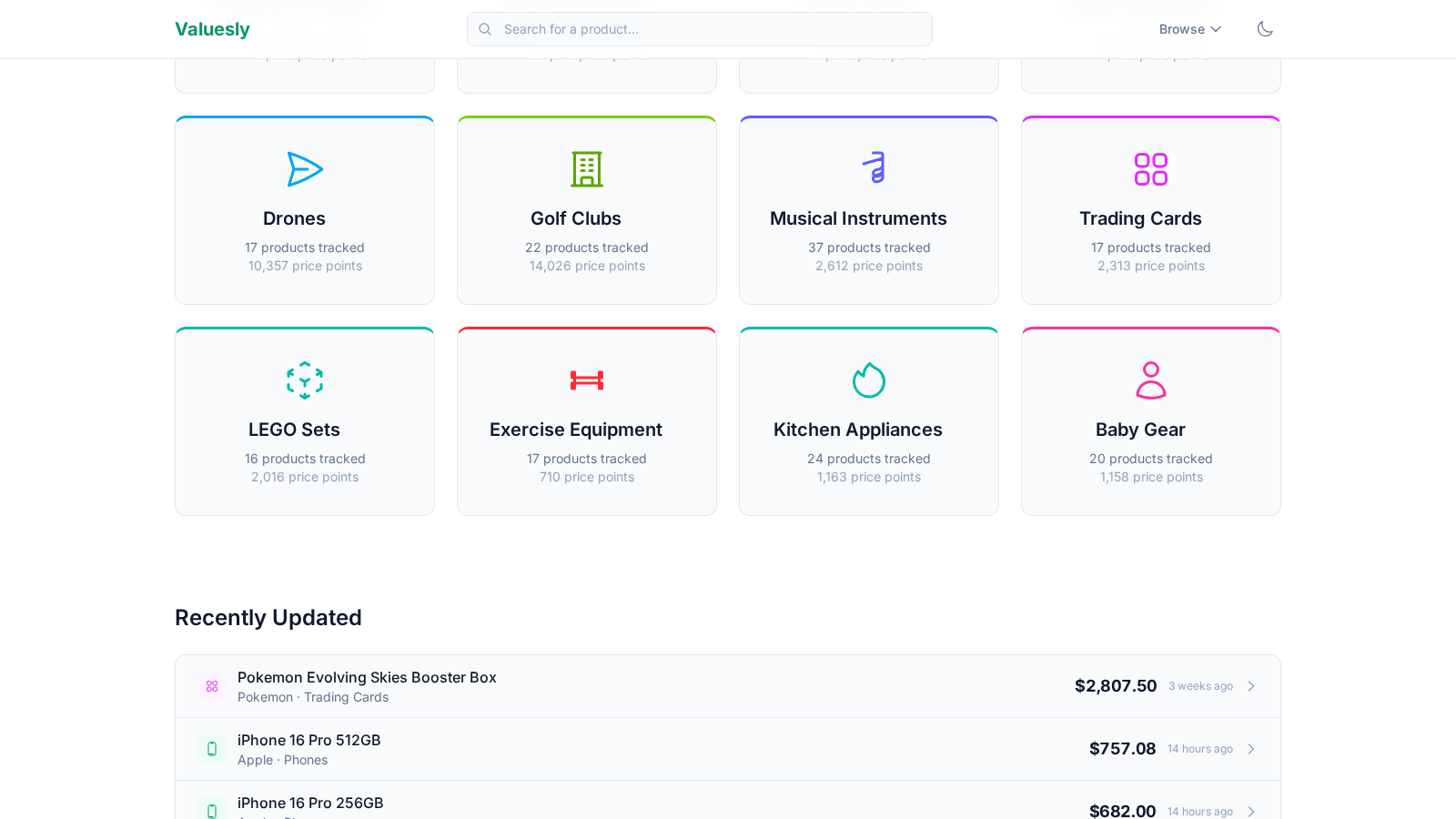
Valuesly is a browseable price guide for used electronics, organized by category — phones, laptops and tablets, gaming, PC components, cameras and lenses, smartwatches, musical instruments, and a handful more. Each product carries a real-market value calculated from actual sold prices aggregated across multiple online marketplaces, not from asking-price scraping.
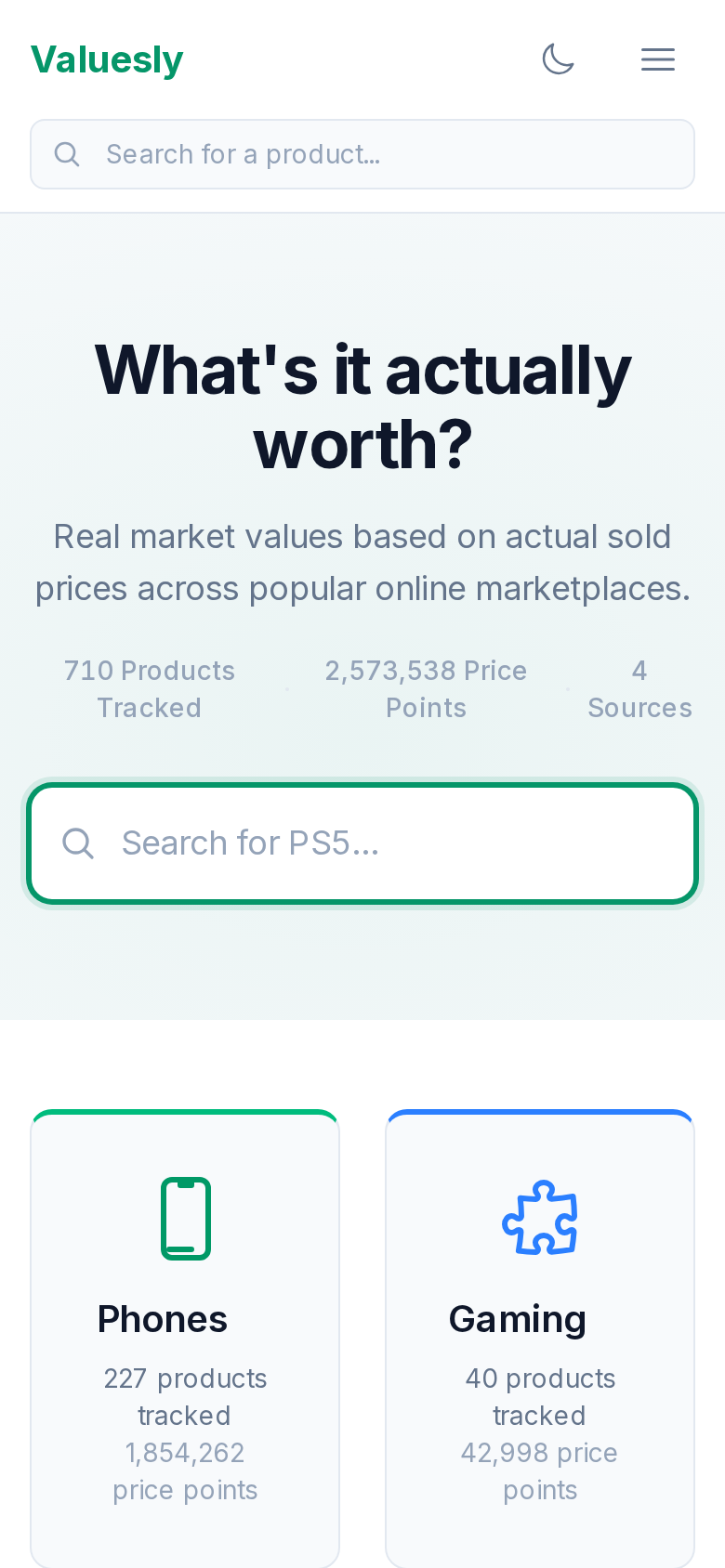
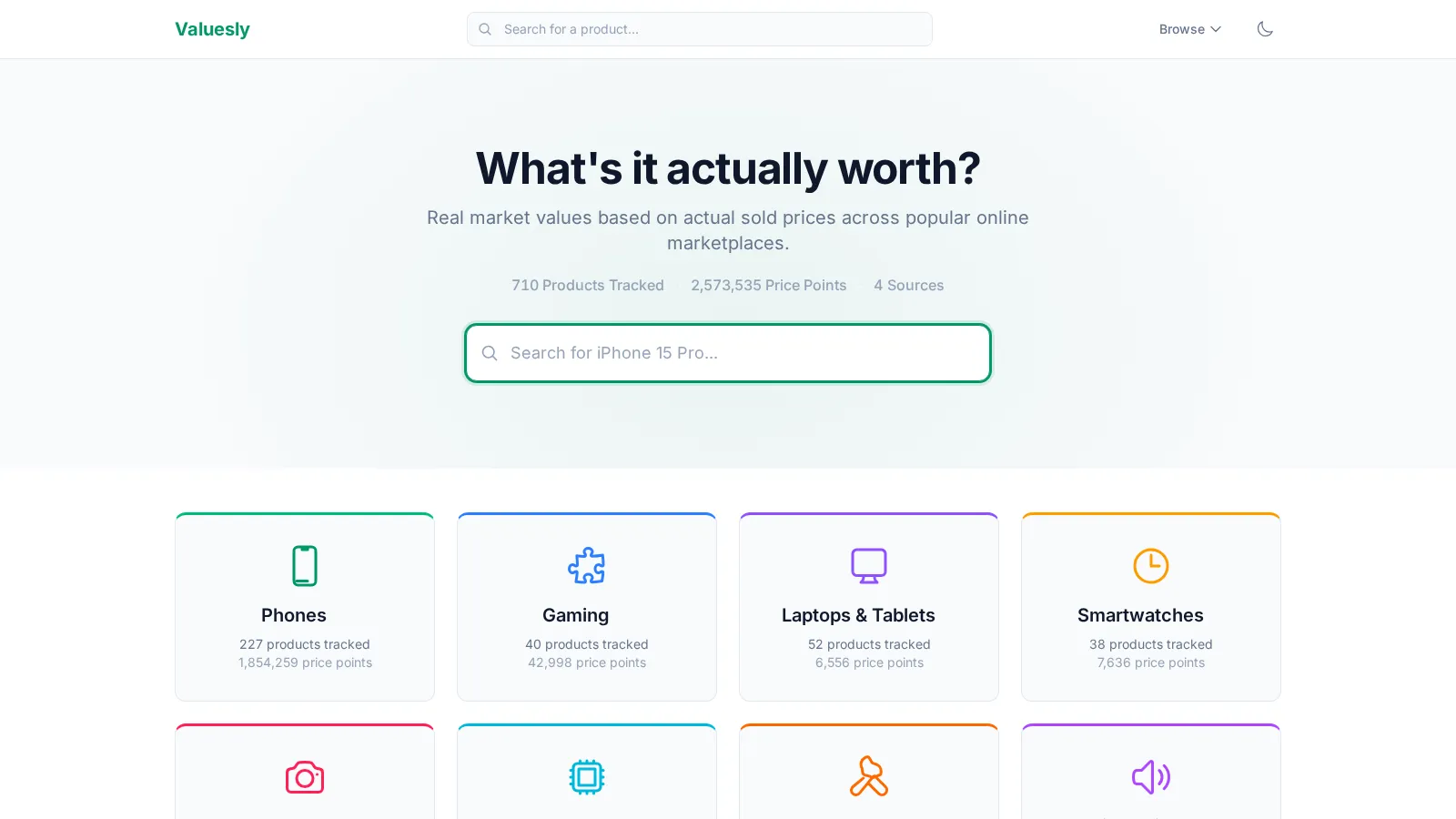
The data is the product. Behind the browse UI sits a pipeline that ingests sold-listing data and rolls it into a single per-product number that updates as the market moves. The homepage advertises the scale of the work — products tracked, price points, sources — because that’s the proof the number on each product page is real.
How we shipped it
Built end-to-end on Laravel with Alpine driving the browsing interactions and a Tailwind front end that stays fast. The marketplace data ingestion and the read side run on owned infrastructure, so the price guide visitors see is always backed by the most recent rollup. No third-party pricing API to rent, no SaaS dashboard between the data and the page.
Outcome
Valuesly runs as a live price guide with hundreds of products tracked and millions of price points behind the rollups. The data, the pipeline, and the front end stay owned — no per-query API bill, no platform between Valuesly and its readers.